Stories & Visions · Biblical Accounts
The Angel Who Fed Elijah in the Wilderness: 1 Kings 19 Comfort
Discover how the angel fed Elijah under the broom tree in 1 Kings 19, revealing how divine grace comforts weary souls during burnout and exhaustion.
Direct Answer (Quick Summary)
In 1 Kings 19, an angel was sent to provide warm bread, fresh water, and gentle rest to the prophet Elijah when he collapsed in the desert from overwhelming burnout. Rather than rebuking Elijah for his exhaustion, God sent heavenly comfort to sustain his physical strength before renewing his spiritual purpose.
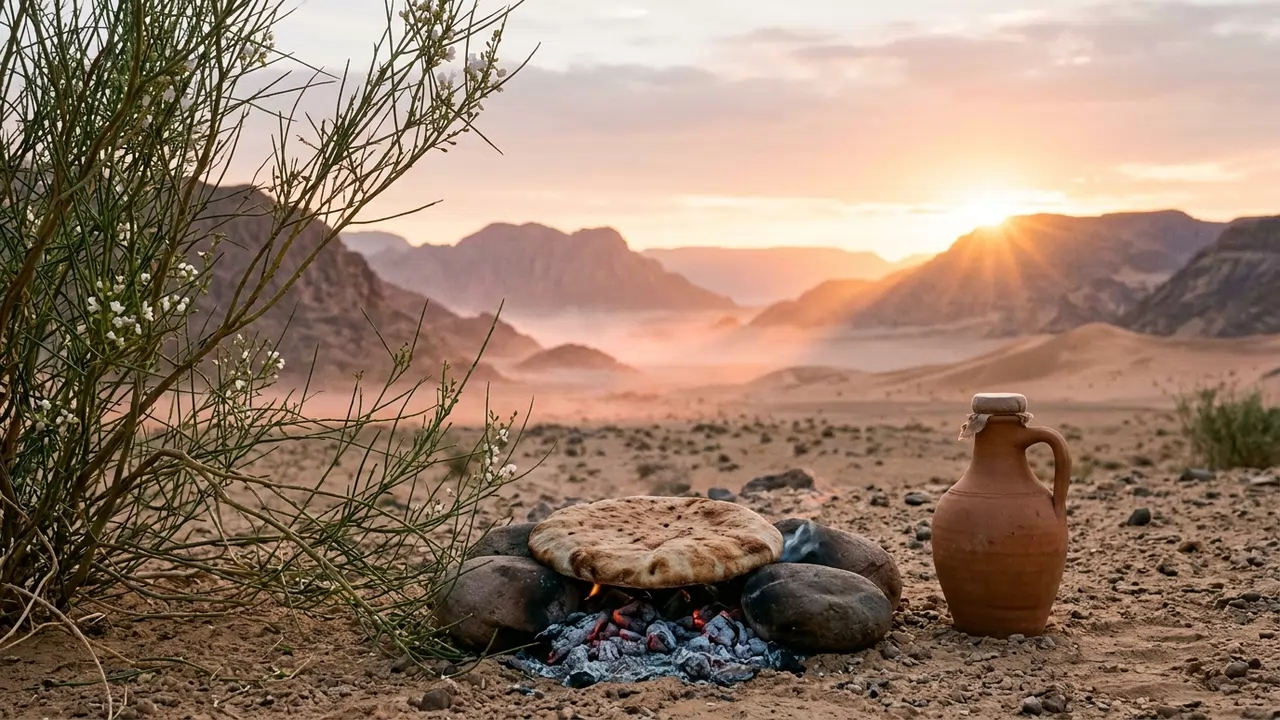
The narrative of the angel helping Elijah in the wilderness recorded in 1 Kings 19 is one of the most tender depictions of divine empathy, physical restoration, and unseen protection found anywhere in Scripture. When the mighty prophet Elijah collapsed in despair beneath a sparse desert shrub, heaven did not respond with a stern sermon or an urgent command, but with fresh baked bread, a jar of water, and gentle permission to rest.
If you are reading this while feeling completely depleted, weighed down by heavy responsibilities, or wondering if God understands how tired you truly are, Elijah's story offers deep solace. In the peaceful visual storytelling of The Watchers YouTube channel, every scene begins in everyday vulnerability before celestial assistance arrives, illustrating that divine guardianship meets us right at our human breaking points.
Take a few moments to rest your mind with our 12-minute choral reflection—Angels Caught on Camera Saving People | 12 Minutes of Hope & Angelic Choir—and reflect on God's sustaining grace:
What caused Elijah to flee into the wilderness and wish for death?
Elijah fled into the wilderness because he experienced profound emotional, physical, and spiritual burnout following his confrontation with the prophets of Baal on Mount Carmel. Intimidated by Queen Jezebel's death threat, Elijah's emotional reserves crashed, prompting him to flee south into the desert and plead for God to end his life.
In 1 Kings 18, Elijah reached the peak of public victory. Yet immediately following this spiritual triumph, 1 Kings 19:3–4 reveals human fragility:
"And when he saw that, he arose, and went for his life... and came and sat down under a juniper tree: and he requested for himself that he might die; and said, It is enough; now, O Lord, take away my life; for I am not better than my fathers."
Historical commentaries, including the Catholic Encyclopedia overview of the Prophet Elias, emphasize that Elijah was suffering from acute physical and nervous exhaustion. He left his servant behind at Beersheba and pushed into the scorching Negev alone. His cry—"It is enough"—is the universal utterance of a soul completely depleted. To see how divine care protects traveling souls in their lowest seasons, read our companion study on guardian angels in the Bible.
How did the angel minister to Elijah under the broom tree?
The angel ministered to Elijah by touching him gently, providing warm bread baked on hot stones, placing a jar of cool water beside his head, and encouraging him to sleep. The angel returned a second time with more food, speaking tender words that validated his weakness rather than rebuking his despair.
Scripture records this intimate encounter in 1 Kings 19:5–7:
"And as he lay and slept under a juniper tree, behold, then an angel touched him, and said unto him, Arise and eat. And he looked, and, behold, there was a cake baken on the coals, and a cruse of water at his head. And he did eat and drink, and laid him down again. And the angel of the Lord came again the second time, and touched him, and said, Arise and eat; because the journey is too great for thee."
Key details reveal the nature of heavenly companionship:
- The Gentle Touch: The angel did not startle the prophet. A quiet touch conveyed safety and presence.
- Warm, Sustaining Bread: In Hebrew, the bread is ugath retzafim, flatbread baked on heated stones.
- No Lecture on Faith: Heaven recognized that an exhausted body cannot process spiritual instruction until it is fed and rested.
- The Second Awakening: When Elijah ate and slept again, the angel waited, touched him again, and spoke with profound empathy: "Because the journey is too great for thee."
Here is how Elijah's desert experience contrasts human exhaustion with divine provision:
| Human Vulnerability | Elijah's Desert Reality | Heavenly Angelic Response | Spiritual Meaning |
|---|---|---|---|
| Physical Depletion | Wandering a day without food | Warm baked cake and fresh water | God attends to bodily needs first |
| Emotional Collapse | "It is enough; Lord, take my life" | Gentle waking touch and quiet rest | Heaven never shames our exhaustion |
| Spiritual Isolation | Felt completely alone in the desert | Angel standing watch by his head | Unseen protectors never abandon us |
| Future Overwhelm | Cannot face tomorrow's journey | "The journey is too great for thee" | Grace provides strength beyond our limits |
Why does God provide physical rest before spiritual direction?
God provides physical rest before spiritual direction because human beings are unified creatures of body, mind, and spirit. When our physical bodies are drained and our nervous systems are overstimulated, our capacity for prayer, discernment, and emotional resilience breaks down. By feeding and resting Elijah first, God restored the foundation of his human health.
As noted in Encyclopaedia Britannica's analysis of biblical literature, the Hebrew worldview viewed the physical body as an essential part of covenant life, not an obstacle to be ignored. St. Thomas Aquinas observed that bodily fatigue directly affects human emotion and judgment.
This divine pattern mirrors the promise of Psalm 91:11–12: God commissions His angels to bear us up so that our feet do not stumble. For a deeper understanding, explore our guide to Psalm 91 and angelic protection.
How did the angel's food sustain Elijah's journey to Mount Horeb?
The angel's food miraculously sustained Elijah for forty days and forty nights across two hundred miles of mountainous wilderness to Mount Horeb, the sacred mount of God. Once Elijah arrived and took shelter in a cave, God spoke to him not through a violent storm, earthquake, or roaring fire, but in a gentle whispering breeze.
As 1 Kings 19:8 explains:
"And he arose, and did eat and drink, and went in the strength of that meat forty days and forty nights unto Horeb the mount of God."
This sacred journey carried profound symbolic and spiritual significance:
- Miraculous Sustenance: Just as the manna in Exodus sustained Israel in the desert, the food delivered by the angel provided supernatural vitality that went far beyond ordinary caloric nourishment.
- Returning to the Roots: By traveling to Horeb (Mount Sinai), Elijah returned to the very place where God made His covenant with Moses, seeking foundational clarity.
- The Still Small Voice: When God finally spoke to Elijah on the mountain (1 Kings 19:11–12), He was not in the hurricane wind, the violent tremor, or the raging blaze. God was present in qol demamah daqqah—a "sound of sheer silence" or a "still small voice." The stillness echoed the gentle touch of the angel in the desert.
How does Elijah's angelic encounter bring hope to our struggles today?
Elijah's angelic encounter brings comfort to modern believers by showing that it is not a sin to be exhausted, that admitting human limitation is the beginning of grace, and that God sends help in our darkest deserts. When life feels overwhelming, heaven invites us to take small, humble steps toward recovery rather than demanding instant perfection.
In modern life, many people push themselves to the brink of collapse through relentless work or emotional stress. When anxiety strikes, we often assume exhaustion reflects a lack of faith.
Elijah's story teaches three liberating principles:
- Honor Your Physical Needs: Sometimes the most spiritual act you can do is drink a glass of water, eat a nourishing meal, and go to bed early. God cares for your rest.
- Acknowledge Human Limits: The angel's words—"the journey is too great for thee"—remind us that we are created to rely on God's strength, not isolated willpower.
- Look for Quiet Messengers: Just as the angel met Elijah unawares in the Negev, God frequently sends comforting help through ordinary people. To learn how messengers cross our paths through unexpected hospitality, read our guide on entertaining angels unawares in Hebrews 13:2.
A peaceful prayer for when the journey is too heavy
Whenever you find yourself sitting beneath your own metaphorical broom tree, feeling that you have nothing left to give, remember that you are never abandoned in the wasteland. Unseen heavenly guardians watch over your sleeping moments, interceding for your restoration.
If you need words to anchor your heart tonight, consider this quiet reflection:
"Heavenly Father, like Elijah in the desert, my spirit is tired and the road ahead feels too great for me. Send Your peace to surround my home. Let Your holy angels stand watch over my rest, nourishing my soul and granting me strength to rise again tomorrow in Your grace. Amen."
To enrich your evening routine with comforting scripture and historical prayers, explore our devotional guide on prayers to your guardian angel for protection and peace.
Explore more articles in Stories & Visions or visit our YouTube channel.
Frequently Asked Questions
What did the angel bring to Elijah under the broom tree?
In 1 Kings 19:6, the angel brought Elijah a freshly baked cake of bread cooked over hot coals and a jar of cool water. This miraculous physical provision refreshed the exhausted prophet after he had walked an entire day into the scorching desert wishing for death.
Why did the angel touch Elijah a second time?
The angel touched Elijah a second time because the prophet was so utterly drained that one meal was insufficient for his recovery. The angel tenderly said, 'Arise and eat, because the journey is too great for thee,' acknowledging Elijah's human limitations with compassionate understanding.
What kind of tree was the broom tree in 1 Kings 19?
In the King James Version, the plant is translated as a juniper tree, but Hebrew scholars identify it as the white broom bush (*Retama raetam*). This desert shrub grows sparse branches and small white blossoms, offering humble shade in the barren arid wilderness of Beersheba.
What spiritual lesson does Elijah and the angel teach about burnout?
Elijah's story demonstrates that God honors human physical needs before demanding spiritual output. When Elijah experienced severe depression and burnout, God did not lecture him; instead, heaven provided sleep, nourishing food, and gentle companionship, reminding us that rest is an essential part of divine grace.