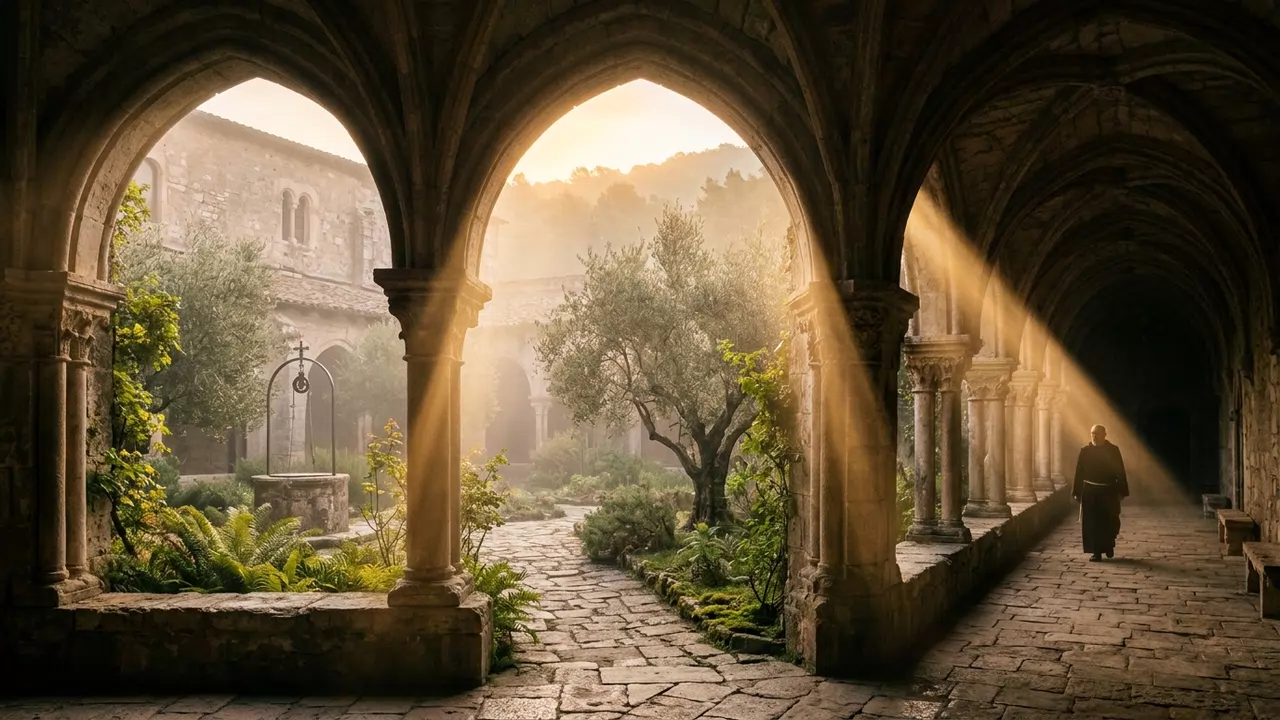
Stories & Visions · Cinematic Visions
Who Are the Watchers? The Biblical Meaning of Watchful Angels
Learn who the Watchers are in the Bible (Daniel 4) and ancient texts, how watchful guardian angels inspire hope, and the vision behind The Watchers channel.
Direct Answer (Quick Summary)
In the Bible, 'the Watchers' (Aramaic: 'irin, meaning 'wakeful ones') are holy heavenly beings described in the Book of Daniel (4:13, 17, 23) who never sleep and execute God's decrees on earth. Today, the name also inspires comforting artistic visions of guardian angels watching over humanity.

Who are the Watchers? In biblical tradition, the Watchers (known in Aramaic as ʿirin, or "the wakeful ones") are sleepless heavenly messengers described in the Book of Daniel (Chapter 4) who observe earthly life and carry out the decrees of the Most High. Far from being figures of dread, the holy Watchers of Scripture represent tireless vigilance—the comforting truth that heaven's eyes are never closed to human need.
That ancient biblical title is also the heart and namesake of our creative project, The Watchers YouTube channel (@thewatchersangels). Whether through 20-second cinematic shorts or 12-minute choral meditations, our goal is to translate the ancient theology of watchful angels into visual poetry for the modern world. Below, we explore the scriptural origins of the Watchers, the linguistic beauty of their name, and how their story connects to the everyday comfort of guardian angels in the Bible.
Who are the Watchers in the Book of Daniel?
In the Book of Daniel (4:13, 17, and 23), the Watchers are holy, sleepless angels sent from heaven to declare God's wisdom and sovereignty over human kingdoms. Described as "a watcher and an holy one," these celestial messengers remind earthly rulers and ordinary believers alike that heaven actively watches over the world.
Among the books of the canonical Bible, chapter 4 of Daniel is the primary place where the title "Watcher" appears directly. Written in Imperial Aramaic, the chapter recounts a prophetic dream given to King Nebuchadnezzar and interpreted by Daniel.
In Daniel 4:13 and 4:17 (KJV), the king describes what he saw:
"I saw in the visions of my head upon my bed, and, behold, a watcher and an holy one came down from heaven... This matter is by the decree of the watchers, and the demand by the word of the holy ones: to the intent that the living may know that the most High ruleth in the kingdom of men."
The scripture pairs two words together: "a watcher and an holy one" (ʿir we-qaddish), a grammatical hendiadys expressing a single unified idea: a holy Watcher.
Daniel 4 teaches three truths about these beings:
- They descend from heaven: They act as direct emissaries of God's presence.
- They are holy (qaddish): In Daniel's canonical account, there is nothing dark about the Watchers; they are pure servants aligned with divine mercy.
- Their mission is spiritual awakening: Verse 17 states their purpose—"that the living may know" that God rules with wisdom.
What does the Aramaic word "'Ir" (Watcher) mean?
The Aramaic word ʿir (עִיר, plural ʿirin) literally means "wakeful one," "vigilant," or "sleepless." Rooted in the ancient Semitic verb for staying awake on guard duty, the title portrays angels as tireless sentinels who remain alert through the darkest hours of the night when human beings are asleep or vulnerable.
As documented in the Wikipedia scholarly overview of the Watcher (angel), the linguistic journey of this word across ancient translations reveals how early believers pictured angelic care:
- Aramaic (ʿir / ʿirin): Connected to the Hebrew root ʿwr ("to awake"). It evokes a watchman standing on the city walls at midnight so the families inside can sleep in peace.
- Greek (egrēgoroi and angeloi): The Septuagint frequently translated the term as angeloi ("angels"), while other Second Temple Greek texts used egrēgoroi (ἐγρήγοροι), meaning "those who are awake."
- Latin (vigil): In the Latin Vulgate, St. Jerome translated the term as vigil—the root of vigilant and vigil.
This imagery of sleepless vigilance echoes Psalm 121:3–4:
"He will not suffer thy foot to be moved: he that keepeth thee will not slumber. Behold, he that keepeth Israel shall neither slumber nor sleep."
When early Christians and Jewish sages spoke of the holy Watchers, they were naming this assurance: even when human strength gives out, heaven's guardians remain wide awake.
How do the Watchers in Daniel differ from the Book of Enoch?
In the canonical Book of Daniel, the Watchers are exclusively holy angels who serve God faithfully. In contrast, the non-canonical Book of Enoch (1 Enoch) uses the term for two groups: rebellious angels who fell before the Flood, and the faithful holy Watchers—the great archangels—who stood firm to protect humanity.
Because modern movies and internet folklore often sensationalize ancient apocryphal texts, it is helpful to separate sensational myths from historical text. As the Jewish Encyclopedia article on Angelology and the scholarly entry on the Book of Enoch explain, 1 Enoch is an ancient Jewish apocalyptic work written during the Second Temple period. While revered in the Ethiopian Orthodox Tewahedo tradition, it was not included in the Hebrew Bible or the mainstream Christian Old Testament canon.
Even within 1 Enoch, however, the word "Watcher" simply means an angel of high rank, and the narrative draws a sharp moral line between two very different groups:
| Feature | Holy Watchers (Daniel 4 & Second Temple Tradition) | Fallen Watchers (1 Enoch Chapters 6–16) |
|---|---|---|
| Canonical Status | Present in the canonical Bible (Daniel 4:13, 17, 23). | Found in non-canonical pseudepigrapha (1 Enoch). |
| Spiritual Nature | Pure, obedient ("a watcher and an holy one"). | Rebellious spirits who abandoned their heavenly station. |
| Relationship to Humanity | Protect, guide, intercede, and deliver God's word. | Corrupted the earth prior to the Flood and were bound. |
| Key Figures | The sleepless heavenly host and the great Archangels. | Led by figures like Samyaza and Azazel before judgment. |
Crucially, in 1 Enoch Chapters 9 and 20, when humanity cries out to heaven for help, the text explicitly calls the faithful defenders of humanity "the holy angels who watch"—namely Michael, Gabriel, Raphael, and Uriel. They look down from heaven, hear the groaning of human beings, and bring humanity's prayers before the throne of God. You can read the full story of these named protectors in our dedicated guide to Archangels Michael, Gabriel, and Raphael.
How does the theme of watchful angels inspire stories of hope today?
The theme of watchful angels inspires modern storytelling by turning abstract theology into visible moments of grace. By imagining how unseen guardians step into ordinary human emergencies—on streets, piers, and train platforms—artistic stories help people visualize the quiet promise of Psalm 91: that help is closer than we think.
Today, on The Watchers YouTube channel, we explore that question through cinematic AI art and original choral music. Every video we produce follows three creative principles designed to honor the peaceful spirit of Scripture:
- Ordinary beginnings without the angel: Every scene in our short films—such as Angels Caught on Camera at the Last Second and Angels Caught on Camera Saving People—begins in a completely ordinary setting. We see a child chasing a ball toward a street, a hiker near a steep ridge, or a solitary person on a rainy platform, with no angel in sight.
- Grace at the last second: Only when human strength is not enough does a radiant figure step into the frame. The visual style is never frightening; it is warm, uplifting, and gentle.
- Complete honesty with our audience: We state clearly on every video and across this website that our films are AI-generated fiction—artistic visions of guardian angels, never real security footage.
Watch: 12 Minutes of Hope & Angelic Choir
If you are looking for a quiet space to rest, pray, or let go of the day's anxiety, we invite you to listen to our long-form visual meditation, Angels Caught on Camera Saving People | 12 Minutes of Hope & Angelic Choir, featuring our original choir composition "The Watchers - Hope":
How can remembering the Watchers bring peace in difficult times?
Remembering the biblical Watchers brings peace by shifting our focus from fear to trust. Knowing that God's messengers are "wakeful ones" who never slumber allows believers to release nighttime anxiety, pray with confidence for loved ones far away, and walk through uncertain seasons with quiet courage.
When we bring together the Aramaic meaning of Daniel 4 ("the wakeful ones") and the New Testament teaching of Hebrews 1:14 ("ministering spirits"), we find practical encouragement for daily faith:
- When you worry about loved ones far away: Remembering that God's watchful messengers are not limited by distance helps you entrust your family to God's care.
- When you feel unseen in a crowded world: The very word Watcher means heaven is paying attention to your unspoken prayers and struggles.
To continue exploring what Scripture teaches about these unseen companions, read our foundational guide on guardian angels in the Bible or discover the specific missions of Michael, Gabriel, and Raphael.
Explore more articles in Stories & Visions or visit our YouTube channel.
Frequently Asked Questions
Where do the Watchers appear in the canonical Bible?
The Watchers appear explicitly in chapter 4 of the Book of Daniel (verses 13, 17, and 23). Written in Aramaic, the text calls them 'irin qaddishin ('holy watchers' or 'wakeful ones'), describing them as pure heavenly messengers who descend from heaven to announce God's sovereignty.
What does the word 'Watcher' mean in Hebrew and Aramaic?
The Aramaic word 'ir (plural 'irin) comes from a root meaning 'to be awake,' 'sleepless,' or 'vigilant.' Early Greek translators often rendered it as egregoroi (the wakeful ones) or simply angeloi (angels), highlighting their tireless vigilance in serving God and observing human life.
How does Daniel 4 differ from the Book of Enoch regarding the Watchers?
In the canonical Book of Daniel, the Watchers are exclusively holy, obedient angels of God. In the non-canonical Book of Enoch (1 Enoch), the term is applied both to rebellious spirits who fell and to the faithful archangels—like Michael, Gabriel, and Raphael—who remained holy and protected humanity.
Are the videos on The Watchers YouTube channel real camera footage?
No. The short films and choir meditations on The Watchers (@thewatchersangels) are AI-generated cinematic fiction. They are created as uplifting, artistic visions of guardian angels to bring comfort and hope, and are never presented as real security camera recordings.