Guardian Angels · Theology & Tradition
Do We Each Have a Guardian Angel? What Traditions Say
Do we each have a guardian angel? Explore what the Bible (Matthew 18:10), St. Thomas Aquinas, and Christian traditions teach about personal angels.
Direct Answer (Quick Summary)
According to historic Christian tradition—including Catholic, Eastern Orthodox, and early Church Fathers like St. Jerome and St. Thomas Aquinas—yes, every human person is accompanied by a personal guardian angel. While the Bible does not state a formal one-to-one rule, passages like Matthew 18:10 and Acts 12:15 strongly support personal angelic care.
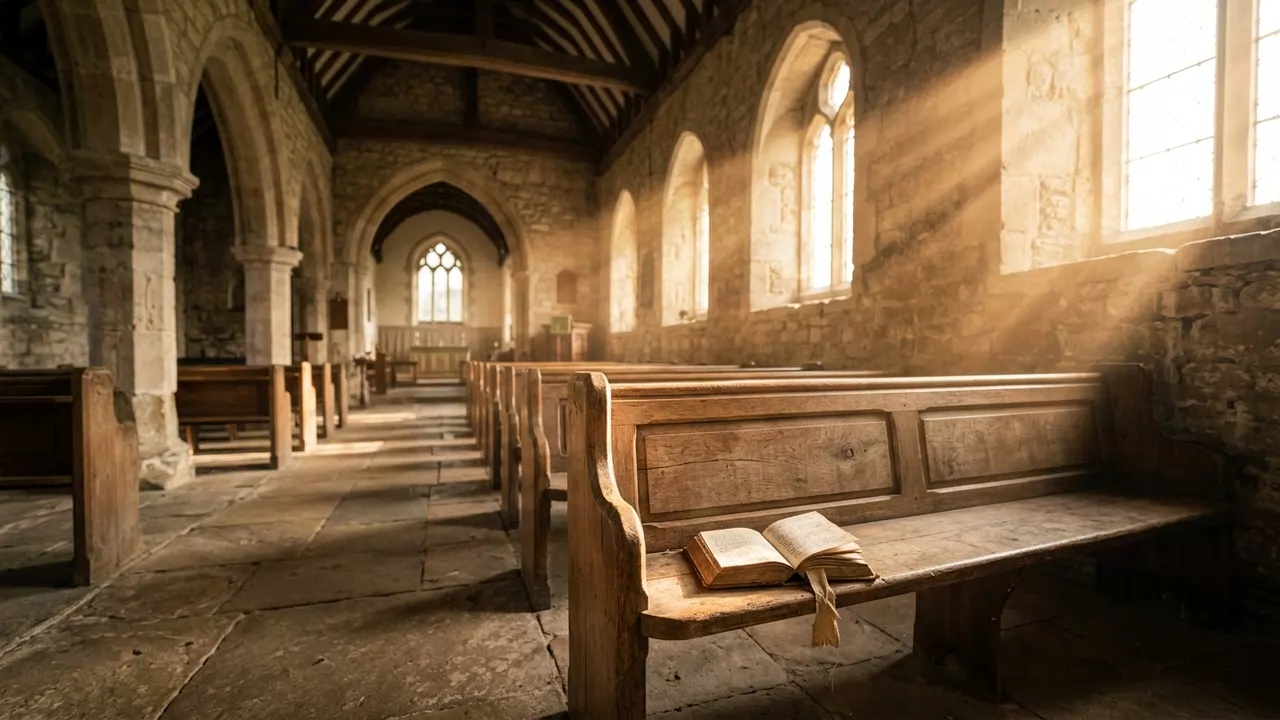
Do we each have a guardian angel? According to two thousand years of historic Christian tradition—anchored in Matthew 18:10, Acts 12:15, and theologians from St. Jerome to St. Thomas Aquinas—yes, God assigns a personal guardian angel to watch over, guide, and intercede for each human soul. If you are asking this today, perhaps you are walking through an uncertain season and wondering whether heaven notices a single, ordinary life.
While the canonical Bible focuses primarily on God's sovereignty rather than systematic rules of angelology, the conviction that no person walks through life unguarded is one of the oldest beliefs in Judeo-Christian history. Below, we examine what Scripture says about guardian angels in the Bible, how Catholic, Eastern Orthodox, and Protestant traditions answer this question, and how St. Thomas Aquinas explained the bond between a soul and its unseen companion.
Watch: a short cinematic story of an angel arriving just in time from The Watchers YouTube channel:
What does the Bible say about each person having a guardian angel?
The Bible teaches repeatedly that God sends heavenly messengers to protect individuals, families, and communities, though it does not contain a single verse stating a mathematical rule that every human has one exclusive angel. Instead, Scripture points to personal guardianship through Jesus' teaching in Matthew 18:10 and the early Church's words in Acts 12:15.
Biblical scholars trace a clear progression from national protection to intimate, individual companionship across Scripture:
- The personal promise of the Psalms: In Psalm 91:11 (KJV), the Hebrew text addresses the reader in the singular (lakh, "for thee"): "For he shall give his angels charge over thee, to keep thee in all thy ways."
- The companion on the road in Tobit: In the Book of Tobit, Tobit reassures Tobias's weeping mother Anna: "For the good angel will accompany him, and his journey shall be prosperous" (Tobit 5:21). Here, one of the named messengers in our guide to Archangels Michael, Gabriel, and Raphael walks beside one young man.
- Jesus' teaching on "their angels" (Matthew 18:10): Welcoming a child, Jesus says: "Take heed that ye despise not one of these little ones; for I say unto you, That in heaven their angels do always behold the face of my Father which is in heaven."
- Peter at the gate (Acts 12:15): After an angel frees Peter from prison, Peter knocks at Mary's gate. When Rhoda recognizes his voice, the disciples reply, "It is his angel" (ho angelos autou), showing that first-century believers assumed an individual had a specific angel.
How do Catholic, Orthodox, and Protestant traditions view personal guardian angels?
Catholic, Eastern Orthodox, and Protestant Christians all agree on the core biblical truth of Hebrews 1:14: that angels are ministering spirits sent by God to serve and protect humanity. However, the three major branches of Christianity differ on whether every individual has a permanent one-to-one angel and how believers relate to them in prayer.
Here is how historic Christian traditions compare on this question:
| Christian Tradition | Does Each Person Have a Guardian Angel? | When Is the Angel Assigned? | Role in Daily Prayer & Devotion |
|---|---|---|---|
| Roman Catholic | Yes. Universal teaching for every human soul (Catechism, para. 336). | At birth (per St. Jerome and St. Thomas Aquinas), guarding the soul until death. | Believers ask their angel for intercession and protection (e.g., the Angel of God prayer), worshipping God alone. |
| Eastern Orthodox | Yes. Woven into liturgical life as a lifelong protector of body and soul. | Emphasized at Baptism ("an angel of peace, a faithful guide"), alongside care from birth. | Morning and evening prayers include daily petitions to one's guardian angel for spiritual vigilance. |
| Mainstream Protestant | Open / Varied. Affirms personal angelic protection by one or multiple angels. | Unspecified. Continuous divine providence throughout life. | Prayer is addressed exclusively to God; believers thank the Father directly for sending His angels. |
The Catholic and Patristic View: Dignity for Every Soul
In the fourth century, St. Jerome wrote a reflection on Matthew 18:10 quoted in the Catechism of the Catholic Church (paragraph 336) and the New Advent Catholic Encyclopedia treatise on Guardian Angels:
"How great the dignity of the soul, since each one has from his birth an angel commissioned to guard it."
Similarly, St. Basil the Great (c. 330–379 AD) taught in Against Eunomius that "beside each believer stands an angel as protector and shepherd leading him to life." Rather than treating guardian angels as an exclusive privilege of kings or prophets, the Church Fathers saw personal guardianship as proof of how deeply God values every ordinary person.
The Eastern Orthodox and Protestant Perspectives
In the Eastern Orthodox Church, every Divine Liturgy includes the petition: "An angel of peace, a faithful guide, a guardian of our souls and bodies, let us ask of the Lord."
During the sixteenth-century Reformation, Protestant thinkers retained reverence for angelic protection while directing all prayer to God alone:
- Martin Luther (1483–1546): In the Small Catechism (1529), Luther taught families to pray before sleep: "Let Thy holy angel be with me, that the wicked foe may have no power over me."
- John Calvin (1509–1564): In his Institutes (Book I, Ch. 14), Calvin noted that while Matthew 18:10 and Acts 12:15 point toward personal angels, more than one angel watches over believers—just as fiery chariots surrounded Elisha's servant in 2 Kings 6:17.
Whether a believer envisions a single companion or an entire company of the biblical Watchers, the comfort is identical: no child of God walks unguarded.
Why did St. Thomas Aquinas teach that every human has a guardian angel?
In his Summa Theologiae (Part I, Question 113), St. Thomas Aquinas explained that every human being receives a personal guardian angel because human life is a vulnerable journey toward eternity. While animals follow natural instinct, human beings possess free will and face complex moral, emotional, and physical dangers that require gentle spiritual illumination.
Known as the Doctor Angelicus, St. Thomas Aquinas devoted Question 113 of the Prima Pars to personal guardianship. As summarized in the Catholic Encyclopedia, Aquinas highlighted four principles:
- Guidance on the road (in statu viae): Because human knowledge is imperfect, the soul receives an angelic companion to illuminate the conscience.
- One distinct angel per person: Each human receives a distinct angel from the Choir of Angels, reflecting how divine providence cares for each individual personally.
- Unfailing mercy: Even when a person makes painful choices, their guardian angel remains near to restrain harm and prompt the heart toward renewal.
- Appointment at birth: Aquinas taught that at birth God appoints a personal guardian angel, while in the womb the child shares in the protection of the mother's angel.
How does your guardian angel help you in everyday life?
A personal guardian angel helps you in everyday life not through dramatic spectacles, but through quiet providence: offering calm thoughts when anxiety rises, prompting your intuition to pause before danger, joining your unspoken prayers before God, and reminding your heart—through everyday moments of grace—that you are deeply loved.
Across Scripture and spiritual reflection, this daily companionship takes three practical forms:
- Quiet moral light and protection: In the spirit of Psalm 91:11–12, angels illuminate the mind with peaceful thoughts and prompt split-second caution. Read more in our guide to signs your guardian angel is near.
- Companionship in solitary hours: When you sit alone in grief—perhaps noticing a gentle reminder of hope like finding a white feather—personal angelology assures you that the room is not empty.
- Presenting your prayers to God: Just as Raphael told Tobit, "I offered thy prayer to the Lord" (Tobit 12:12), your guardian angel prays alongside you when words fail.
How can you connect with the comfort of your guardian angel today?
You can connect with the comfort of your guardian angel today by thanking God for His unseen protection, praying a simple morning or bedtime prayer for wisdom and safety, and pausing in moments of stress to remember that heaven's care accompanies every step you take.
- Pray a classic prayer: Pray Luther's evening petition ("Father, let Thy holy angel be with me") or recite the eleventh-century Angel of God prayer (Angele Dei).
- Entrust loved ones to heaven: When loved ones are far away, remember Matthew 18:10—that their guardian angels stand beside them on earth and before the Father in heaven.
- Rest in choral meditation: Whenever nighttime worry weighs on your heart, let our 12-minute choral piece—Angels Caught on Camera Saving People | 12 Minutes of Hope & Angelic Choir on The Watchers YouTube channel—play softly as you rest in the promise that someone is always watching over you.
Pillar guide for this topic: Guardian Angels in the Bible: Meaning, Verses & Comfort. Explore more in Guardian Angels.
Frequently Asked Questions
Do we each have our own personal guardian angel?
In mainstream Christian tradition—spanning Roman Catholic, Eastern Orthodox, and patristic theology—every human being is believed to have a personal guardian angel assigned by God. Protestant traditions affirm that God sends angels to protect individuals (Psalm 91:11), though some view angelic protection as a shared ministry rather than a strict one-to-one assignment.
Which Bible verse suggests that every person has a guardian angel?
The clearest biblical pointer is Matthew 18:10, where Jesus warns against despising 'little ones' because 'in heaven their angels do always behold the face of my Father which is in heaven.' A second indicator appears in Acts 12:15, when early disciples assume Peter's knock at the gate is 'his angel.'
When is a guardian angel assigned to a person?
In classical theology formulated by St. Jerome and St. Thomas Aquinas (Summa Theologiae I, q. 113), a guardian angel is appointed to every human soul at birth. Before birth, Aquinas taught that the child in the womb shares in the protective ministry of the mother's guardian angel.
Does a guardian angel ever leave or abandon a person?
According to historic Christian angelology and the Catechism of the Catholic Church (paragraph 336), a guardian angel never completely abandons the person entrusted to its care during earthly life. Even when a person makes painful choices, the angel continues to intercede before God and prompt the conscience toward peace.